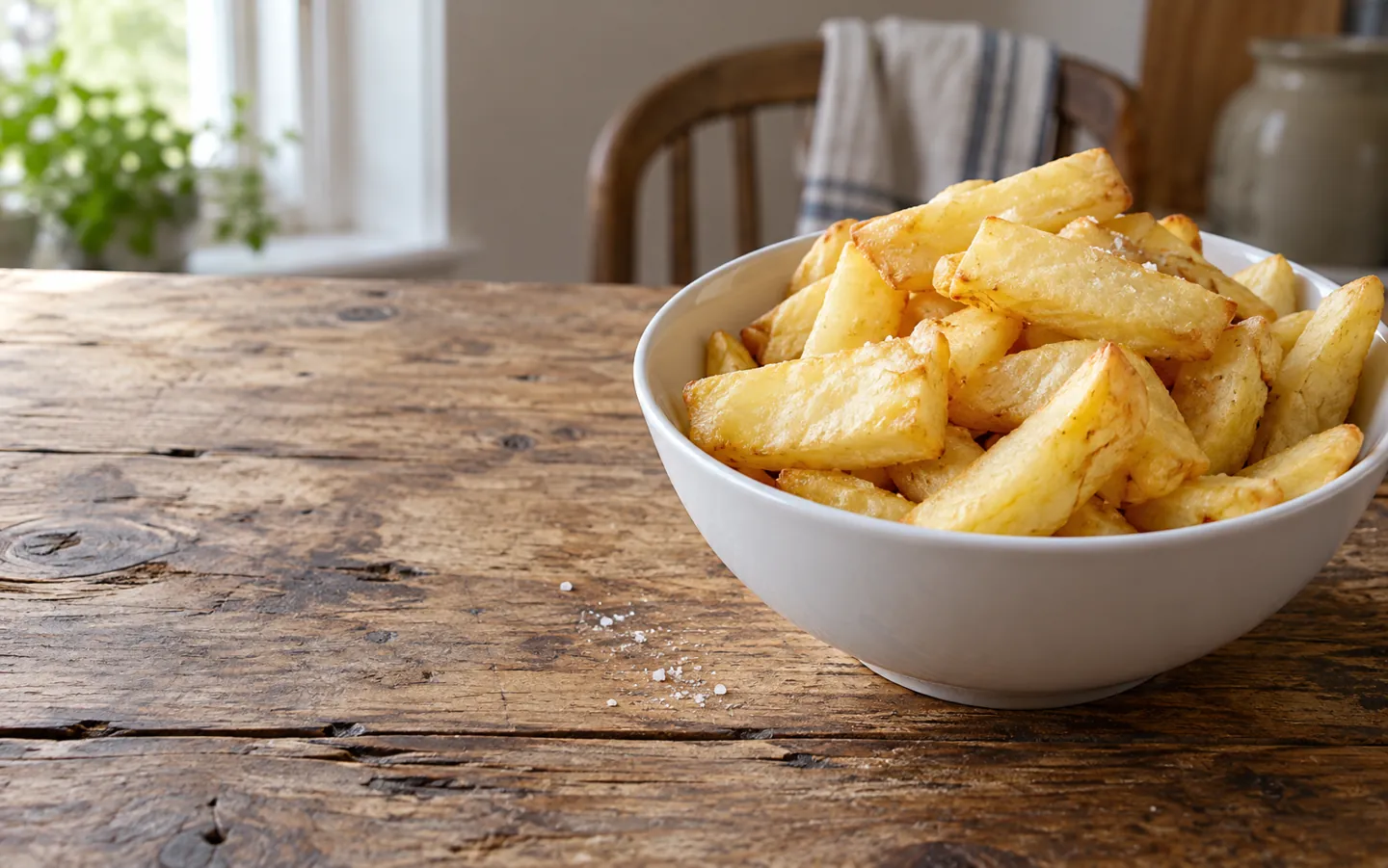
When potatoes are fried, roasted or baked above 120°C, a chemical called acrylamide forms alongside the flavour and colour. UK food safety advice comes down to one simple habit: go for gold.
Pick a cooking choice to see what the guidance and evidence say. The bar shows how much that choice tends to raise acrylamide.
Based on Food Standards Agency advice and EFSA's 2015 review. EFSA notes it did not itself evaluate the studies it summarised.
TWO NUMBERS WORTH KNOWING
Why the chip gets the attention.
One figure on where acrylamide comes from, one on how much cooking style matters.
up to ½
Share of children's dietary acrylamide from fried potato products
EFSA says fried potato products, including French fries and roast potatoes, account for up to half of dietary acrylamide for most children. For adults they are among the most important sources, with coffee.
CHILDREN · EFSA
+64%
Extra exposure from preferring crispy, brown fries
EFSA's review reports that a preference for crispy and brown fried potato products may increase average dietary exposure by 64%, and by 80% for high consumers.
HOME COOKING · EFSA
The FSA says laboratory tests show dietary acrylamide causes cancer in animals and that scientists agree it has the potential to do so in humans, so it recommends reducing intake as a precaution. EFSA notes human studies have so far given limited and inconsistent evidence.
FOUR HABITS TO TRY
Better chips, same potatoes.
None of these needs new equipment. They are about colour, heat and following the instructions you already have.
Stop at golden yellow
Take chips out when they are golden yellow, not brown at the tips. That is the FSA's go for gold advice.
Keep the oil below 175°C
EFSA's review links frying above 175°C with greatly increased acrylamide in fries.
Read the pack for oven chips
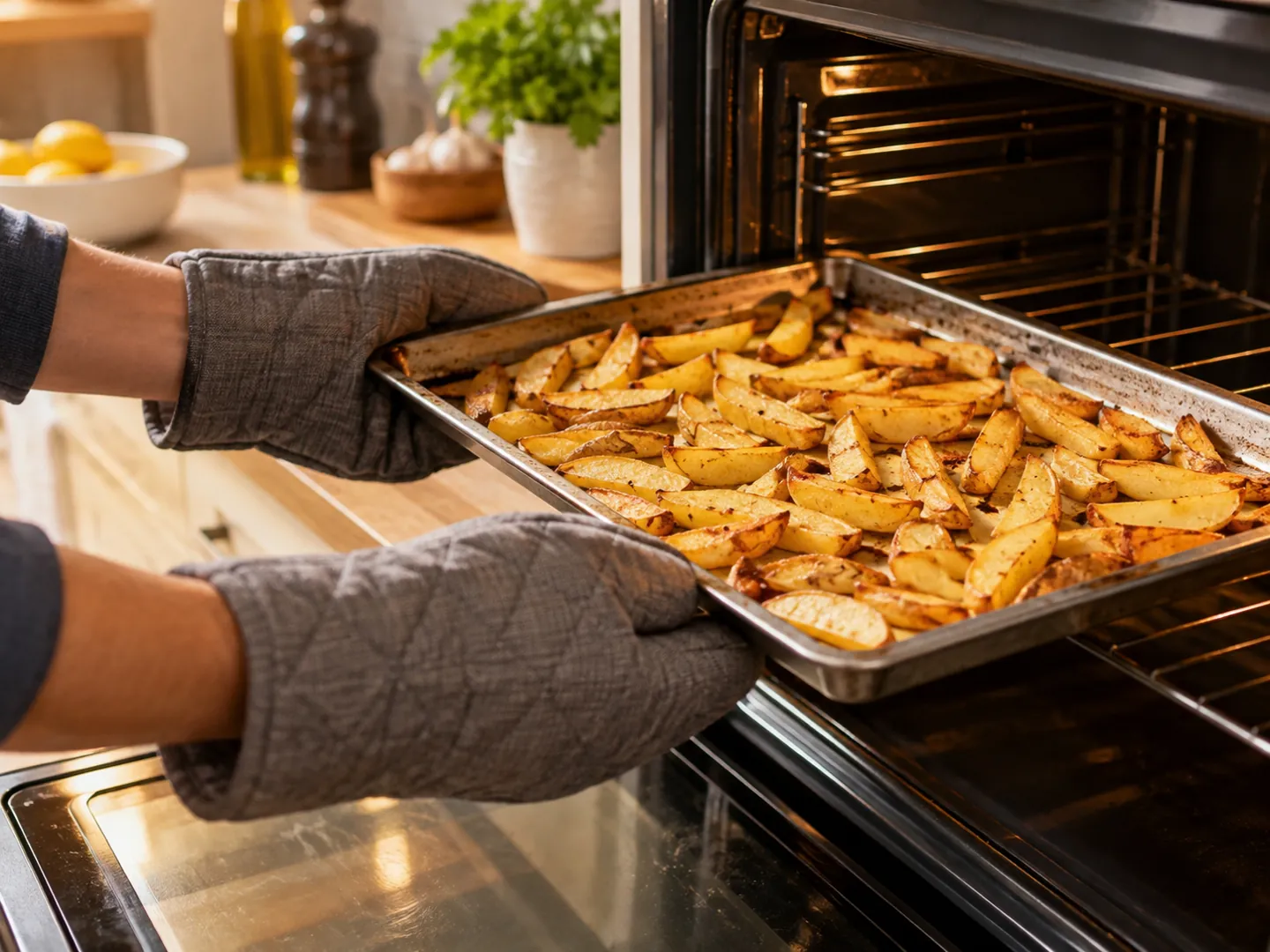
Use the time and temperature on the packet rather than an extra few minutes for colour.
Leave the skins on
The NHS says potatoes eaten with their skin on are a good source of fibre, and to leave skins on where possible.
AI-generated image, not a photograph of a real person or place.AI-generated image, not a photograph of a real person or place.
STORING YOUR POTATOES
The fridge is fine now.
The FSA used to advise against keeping raw potatoes in the fridge, because cold was thought to raise their sugars and so the acrylamide formed when they were cooked.
A study reviewed by the government's Committee on Toxicity found home fridge storage does not materially increase acrylamide-forming potential compared with a cool, dark place. The FSA now says either is fine, which can help avoid waste. The NHS adds: do not eat green, damaged or sprouting bits.
Questions
Questions people ask
What is acrylamide?
A chemical that forms when starchy foods such as potatoes and bread are cooked above 120°C, by baking, frying, grilling, toasting or roasting. It comes from the same browning process, the Maillard reaction, that gives food its flavour and colour.
Are chips bad for you?
The NHS says potatoes are a healthy choice boiled, baked, mashed or roasted with only a little fat and no added salt, but that French fries and other chips cooked in oil or served with salt are not a healthy choice.
Can I keep potatoes in the fridge?
Yes. The FSA updated its advice after a study reviewed by the Committee on Toxicity found fridge storage at home does not materially increase acrylamide-forming potential. You can store them in the fridge or in a cool, dark place.
Do air fryers make less acrylamide?
Not necessarily. EFSA's summary reports industry and consumer tests suggesting hot-air fryers generally produced 30 to 40% more acrylamide than conventional deep oil fryers, though EFSA did not evaluate those findings itself. Colour is still the best guide.
Where do fish and chips come from?
The London Museum says fried battered fish was probably first brought to London in the 1500s by Sephardic Jewish refugees from Portugal and Spain. Potatoes also reached Britain in the 1500s, and fish and chip shops have been part of London's food map since the 1800s.